Are your beautiful new architectural windows quietly causing your heating and cooling bills to skyrocket? It happens more often than you think. You invest heavily in sleek, modern aesthetics. Winter hits, and suddenly you are sitting in a drafty living room. This is a frustrating reality for many property buyers today.
When evaluating premium aluminum sliding windows, a single metric dictates your future comfort and energy expenditure: the U-Factor. Standard aluminum is a highly conductive metal. It acts as a superhighway for heat to escape your home. Thermal break technology fundamentally fixes this structural flaw. Let us cut through the marketing fluff. This guide will walk you through exactly which U-Factor data points actually matter on the job site, how to avoid misleading sales metrics, and how to verify the true performance of your fenestration investment.
Key Takeaways for Window Selection
U-Factor Measures Heat Loss: Unlike wall insulation where higher is better, a lower U-Factor indicates superior thermal resistance. For thermally broken frames in cold climates, target a rating of 0.30 or lower.
Whole-Window vs. Glass-Only: You must evaluate the Whole-Window U-Factor. Center-of-Glass ratings ignore the massive heat loss happening through the metal frame.
Thermal Breaks are Non-Negotiable: A structural polyamide strut inserted inside the aluminum extrusion physically severs the thermal bridge. This is mandatory for modern energy compliance.
Glazing Synergy Matters: Pairing a thermally broken perimeter with Low-E glass coatings and Argon gas fills transforms standard units into high-performance structural systems.
Built-In Acoustic Upgrades: The structural density required to achieve a low U-Factor naturally enhances acoustic dampening. This gives you a secondary soundproofing benefit without extra structural modifications.
Demystifying U-Factor and Current Industry Trends
To make an informed purchasing decision, we first need to grasp the fundamental physics of thermal performance. The U-Factor, sometimes called U-Value in European markets, measures the rate of non-solar heat transfer through a window assembly. In engineering terms, it calculates how many BTUs of heat escape per hour, per square foot, per degree Fahrenheit of temperature difference.
The golden rule is straightforward. The lower the number, the better the window insulates.
Understanding this metric is uniquely critical when dealing with aluminum. A standard, non-thermally broken aluminum frame acts as a massive thermal bridge. During winter, it rapidly conducts your expensive interior furnace heat directly to the freezing exterior. In summer, the reverse happens. The metal absorbs exterior solar radiation and bakes your air-conditioned living space.
If we look at the broader construction landscape right now, energy regulations are undergoing a massive shift. Building codes across North America and Europe are aggressively tightening thermal performance mandates. The push towards Net-Zero buildings and Passive House standards has forced a complete evolution in window engineering. Regulatory bodies simply no longer accept the poor performance of traditional metal frames. As a result, the market has seen a surge in advanced thermal break technologies. These innovations push aluminum window U-Factors down to levels previously only achievable by bulky vinyl or high-maintenance wood.
For a realistic performance baseline, historical data provides a stark contrast. Standard non-thermal aluminum windows typically register a dismal U-Factor between 1.0 and 1.2. High-quality thermally broken frames routinely achieve ratings ranging from 0.30 to 0.45. This allows architects and homeowners to maintain narrow, modern sightlines without sacrificing energy efficiency.
Whole-Window vs. Center-of-Glass U-Factor: The Data Trap
One of the most common pitfalls for consumers navigating specification sheets is confusing the Center-of-Glass U-Factor with the Whole-Window U-Factor. Manufacturers love to highlight the center-of-glass metric in their marketing brochures. The glass alone almost always performs better than the surrounding frame and spacer, which yields a significantly lower, much more impressive number.
Basing a massive custom window order on center-of-glass data will lead to massive real-world performance shortfalls. That measurement strictly evaluates thermal transmittance through the exact middle of the pane. It deliberately ignores the perimeter spacer, the sash, and the aluminum extrusions.
In contrast, the Whole-Window U-Factor is a mathematically weighted average of three distinct zones. It calculates the center of the glass, the edge of the glass where it meets the spacer bar, and the frame itself. Because the edges and frame naturally experience higher heat transfer, the whole-window rating will always be higher than the glass-only number.
If you see a sleek aluminum frame advertised with a U-Factor of 0.18, objective engineering principles suggest you are looking at a glass-only rating. Achieving a true 0.18 whole-window rating in metal requires extreme, highly specialized engineering like quadruple glazing and massive thermal struts. Always demand the National Fenestration Rating Council label, which strictly mandates the publication of the Whole-Window U-Factor.
Metric Type
What It Actually Measures
Typical Aluminum U-Factor
Engineering Verdict
Center-of-Glass
Only the exact middle of the insulated glass unit.
0.18 - 0.24
Highly misleading for real-world energy calculations.
Whole-Window (Standard)
Glass, edge spacer, and non-broken metal frame.
1.00 - 1.20
Fails modern energy codes. High condensation risk.
Whole-Window (Thermal Break)
Glass, warm-edge spacer, and PA66 strut frame.
0.27 - 0.40
The gold standard for modern architectural builds.
The Science of Thermal Breaks: How They Transform U-Factor Data
To understand why specific performance metrics are achievable, you need to look inside the frame. A thermal break is not merely an insulating foam sprayed onto the exterior. It is a core structural component that fundamentally alters the thermal dynamics of the metal.
During the manufacturing process, the interior and exterior aluminum profiles are extruded as two completely independent pieces. These halves are then mechanically locked together using a reinforced structural insulator. In top-tier products, this is a Polyamide 66 strut reinforced with fiberglass. Polyamide possesses a thermal conductivity that is a mere fraction of standard aluminum.
When this polyamide strut is crimped between the extrusions, it physically severs the thermal bridge. Heat conduction hits the polyamide barrier and stops dead. This scientific principle is the primary driver behind lowering the frame's U-Factor. It transforms standard metal into authentic energy saving sliding windows.
Thermal breaks also provide critical durability benefits. If you trace your hand along the edge of standard glass during winter, you will often feel moisture. By preventing the interior aluminum surface from dropping below the indoor dew point, thermal breaks eliminate this condensation. Without it, pooling water inevitably leads to mold growth and the degradation of your drywall and hardwood floors.
Target U-Factor Numbers Based on Your Climate Zone
U-Factor requirements are not universal. The optimal specification sheet depends entirely on the geographic location and specific climate zone of your installation site. Building codes segment regions based on heating and cooling degree days, which requires tailored approaches to window selection.
Northern and Cold Climates In regions characterized by harsh, prolonged winters, your primary energy expenditure is residential heating. The objective is to trap costly furnace heat indoors. Buyers here should target a Whole-Window U-Factor of 0.27 to 0.30 or lower. Achieving this in aluminum usually requires a wide thermal break of 35mm or more, triple glazing, and a high-performance warm-edge spacer.
Mixed and Moderate Climates Areas with distinct, moderate seasons demand a balanced approach. These zones experience winters that require heating, alongside humid summers demanding air conditioning. A U-Factor of 0.31 to 0.35 is generally optimal. Standard thermally broken frames with double-pane Low-E glass and Argon gas fills are typically sufficient to hit these data points efficiently.
Southern and Hot Climates In sun-dominated climates, thermal dynamics reverse. The goal is keeping cooled, air-conditioned air inside while aggressively blocking exterior ambient heat. Buyers can accept a slightly higher U-Factor, typically around 0.40, provided it is paired with a very low Solar Heat Gain Coefficient of 0.25 or lower. The thermal break remains crucial here to prevent the interior frame from becoming burning hot to the touch.
Glass Configurations That Drive Down the U-Factor
Glass occupies 70 to 85 percent of a sliding door's surface area. Therefore, the glazing configuration heavily dictates the final Whole-Window U-Factor. A premium frame simply cannot compensate for cheap, poorly specified glass.
The baseline for modern efficiency is an Insulated Glass Unit featuring double glazing. This effectively halves the thermal transmittance compared to single-pane glass. For extreme climates pushing for U-Factors below 0.28, triple glazing becomes a structural necessity. It creates two separate insulating cavities.
Low-Emissivity coatings are absolutely non-negotiable. These microscopically thin, transparent layers of metallic oxides alter the emissivity of the glass. They allow visible light to flood your living room while reflecting long-wave infrared heat back to its source. Replacing the standard dehydrated air between the panes with dense, inert Argon or Krypton gas physically slows down convection currents, further depressing the U-Factor.
There is an objective acoustic bonus to these upgrades. The exact same mass, wide air gaps, and tight seals required to prevent thermal transfer also severely disrupt sound waves. Property owners often discover that optimizing their thermal data naturally results in high-performance soundproof sliding windows, making the interior environment drastically quieter.
Managing U-Factor in Large-Scale Architectural Designs
Modern architectural trends heavily favor expansive, uninterrupted sightlines. As the size of the window increases, the glass-to-frame ratio shifts dramatically. In massive multi-panel systems, the glass can account for over 90 percent of the total surface area.
This presents a unique data management scenario on the job site. Because the glass dominates the assembly, the Whole-Window U-Factor becomes almost entirely dependent on the glazing performance. If you specify a massive 10-foot tall sliding panel with basic double glazing, the overall thermal performance will plummet.
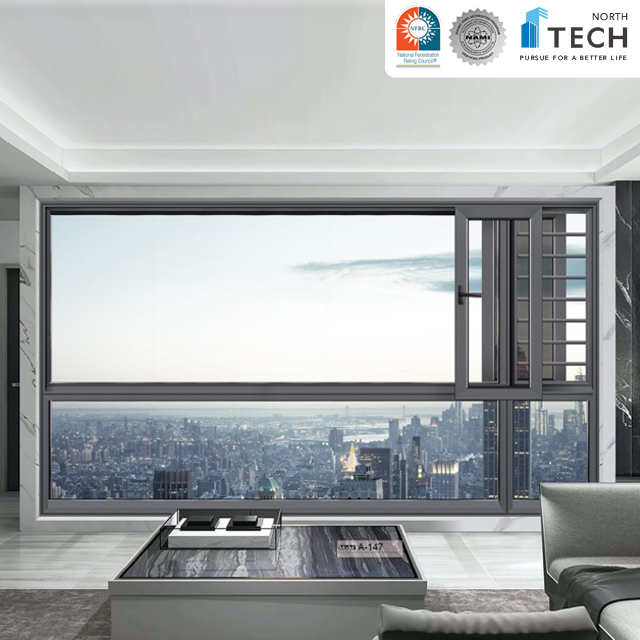
This is where the structural integrity of thermally broken aluminum proves invaluable. Unlike vinyl, which lacks the tensile strength to support massive weights, extruded aluminum can easily carry the extreme load of thick, triple-pane glass required to keep the U-Factor low over a large surface area. By leveraging this structural strength, architects can specify stunning panoramic sliding windows without sacrificing energy code compliance.
A Buyer’s Checklist: Verifying U-Factor Data Before Purchasing
Navigating technical spec sheets can be overwhelming. To ensure the product being purchased will perform exactly as advertised in the real world, utilize this objective verification checklist before signing any purchase orders.
Step 1: Ask for the Certification Label. Do not accept verbal confirmations from sales reps. Request the official testing report. Verify that the published metric represents the Whole-Window assembly.
Step 2: Confirm the Frame Specs. When reviewing a physical cross-section in a showroom, look for the polyamide strut. The technical drawing must explicitly state Thermally Broken Aluminum. If it only says Aluminum Frame, you are likely buying a highly conductive, outdated profile.
Step 3: Check the Spacer Type. Standard aluminum spacers act as thermal bridges at the edge of the glass. Ensure the specification explicitly calls for a Warm-Edge Spacer, like structural silicone foam. This significantly improves edge-of-glass thermal data.
Step 4: Align with Local Codes. Cross-reference the manufacturer’s data with your local municipality's energy codes or rebate programs. Ensure the verified U-Factor falls below the maximum allowable threshold for your specific zone.
Conclusion: Making the Right Engineering Choice
Verifying U-Factor data is the most critical step a buyer can take when investing in architectural fenestration. Aluminum offers unmatched sleekness and structural durability, but its natural conductivity must be managed. By insisting on genuine thermal break frames, scrutinizing whole-window performance ratings, and selecting advanced glazing configurations, you can completely eliminate unwanted heat transfer. Take the time to review the specification sheets carefully. The right data guarantees decades of indoor comfort and drastically reduced utility bills.
Ready to upgrade your project with verified, high-performance fenestration? Explore the precision-engineered solutions at North Tech Windows to find the exact thermal break specifications tailored to your climate and architectural vision.
FAQ
What is considered a good U-Factor for thermal break aluminum sliding windows?
A good U-Factor depends heavily on your local climate zone. Generally, a whole-window U-Factor between 0.30 and 0.40 indicates strong thermal performance for a thermally broken aluminum frame. In colder northern climates, buyers should target a U-Factor of 0.30 or lower to minimize heating costs. In moderate or southern climates, a U-Factor of 0.35 to 0.40 is typically sufficient for optimal energy management.
How does the thickness of the thermal break affect the U-Factor?
The width of the polyamide strut directly correlates with thermal resistance. A standard 14.8mm thermal break provides basic insulation, while advanced systems utilize 35mm, 44mm, or even wider multi-cavity struts. The wider the thermal break, the further the cold exterior metal is separated from the warm interior metal. This drastically lowers the overall U-Factor and prevents interior condensation in sub-zero climates.
Does a lower U-Factor mean the window is soundproof?
Not directly. The U-Factor specifically measures the rate of thermal heat transfer, not acoustic resistance. However, there is a strong positive correlation between low U-Factors and high acoustic performance. The physical features required to drive down a U-Factor, such as triple glazing, asymmetrical glass thicknesses, dense Argon gas fills, and airtight frames, naturally dampen sound wave transmission.
Are thermal break windows worth the investment for retrofits?
Absolutely. Replacing outdated single-pane or non-broken metal windows with thermally broken aluminum yields immediate returns. You will see a drastic reduction in HVAC operational costs, elimination of winter drafts, and a massive upgrade in property value. The energy savings over the lifespan of the window typically offset the higher initial purchase price.
Can I get highly energy-efficient windows with extra-large panoramic views?
Yes, it is entirely possible to achieve exceptional energy efficiency in large-format designs. Because large windows have a high glass-to-frame ratio, the overall U-Factor is heavily dependent on the glazing. Thermally broken aluminum frames possess the tensile strength to support massive, heavy glass units. By installing high-performance Low-E, Argon-filled triple glazing, you can keep the U-Factor exceptionally low despite the expansive glass surface area.
Why are thermal break aluminum windows more expensive than standard aluminum?
The price difference reflects a significantly more complex manufacturing and engineering process. Standard aluminum windows are extruded as a single, continuous piece of metal. Thermal break windows require extruding two completely separate aluminum profiles. These profiles must then be precisely aligned, knurled, and permanently crimped together with a structural polyamide strut. This advanced manufacturing eliminates the thermal bridge, yielding measurable returns through lower HVAC operational costs.
Is U-Factor the same as SHGC?
No, they measure two completely different thermal properties. Both are critical for evaluating window performance. The U-Factor measures how well a window prevents internal heat from escaping the building, which is crucial for winter insulation. The Solar Heat Gain Coefficient measures how much radiant heat from the sun the window blocks from entering the building, which is crucial for summer cooling. Buyers must evaluate both data points based on their specific regional climate.