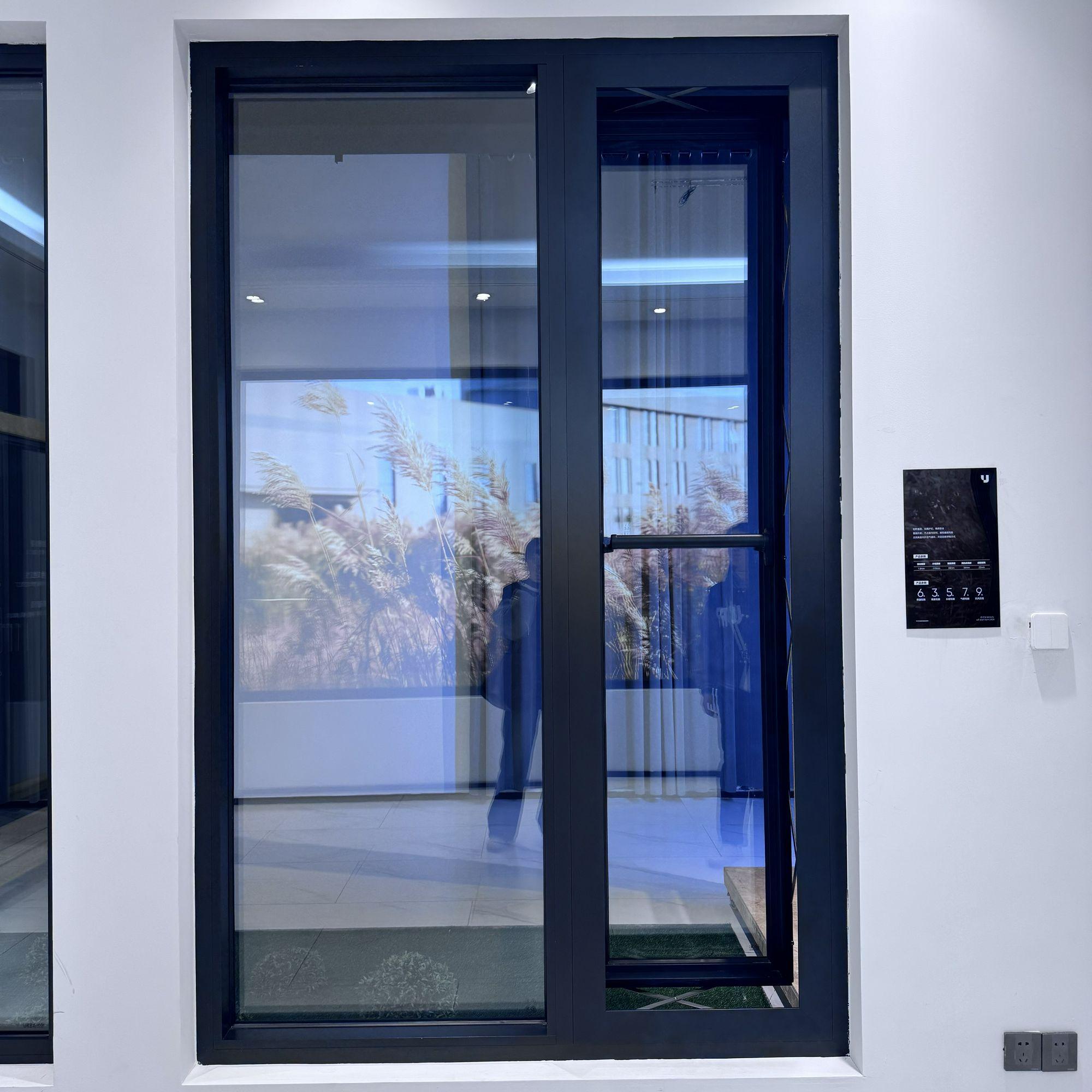
Heavy rain quickly ruins poorly designed window frames. Outward-facing sashes face harsh weather directly. They act as the primary barrier against the elements. Picture a sudden coastal squall. Rain does not just fall. It drives horizontally against your home. In these intense scenarios, you need smart engineering. You must stop leaks before they compromise interior walls.
In this comprehensive guide, you will learn exactly how modern drainage systems protect your property from costly water damage. We will explore the precise mechanisms that ensure your fenestration investment remains secure regardless of the forecast.
Key Takeaways
Concealed Weep Holes: The primary drainage mechanism allows trapped moisture to escape without letting wind or rain back inside.
Sloped Sills and Drainage Channels: Gravity-assisted internal designs ensure precipitation flows continuously away from the interior living space.
Advanced Weatherstripping: High-grade EPDM gaskets and multi-point locks act as the critical first line of defense before runoff even reaches the internal tracks.
Size Matters: Oversized glazing units require enhanced drainage capacity. Their wider surface area catches significantly more wind-driven rain.
Maintenance is Key: Regularly clearing debris from tracks is essential to keep the water management system functioning perfectly over time.
Industry Trend: The Shift Toward Climate-Adaptive Fenestration
Recent fenestration industry analyses reveal a massive architectural shift toward climate-adaptive building envelopes. Global weather patterns are changing. Extreme weather events bring unprecedented levels of wind-driven rain. Consequently, structural engineers are moving away from a reliance on basic surface sealants. The modern focus is entirely on dynamic water management systems.
High winds drive precipitation horizontally against the building envelope. This tests the absolute limits of any sealing capability. The hydrostatic pressure created by severe gales can force microscopic droplets into the tiniest gaps in the assembly. To combat this, modern outward-opening designs are heavily engineered. They possess a unique aerodynamic advantage. Positive wind pressure actively pushes the outward-opening sash tighter against the frame weatherstripping. This mechanical action enhances the compression seal, outperforming traditional inswing alternatives in hurricane-force conditions.
Understanding the Vulnerability of Outward Opening Windows
To appreciate the brilliant engineering behind modern water management, we must first understand why drainage is so critical for this specific architectural style. Builders favor these units for their unobstructed views and superior ventilation capabilities. However, outward-opening designs inherently expose their operational mechanics to the environment.
Unlike sliding configurations that remain housed within a single overlapping track, these windows utilize heavy-duty friction stays. These hinges push the sash outward into the exterior space. When opened to catch a breeze, the interior face of the sash, the metallic hinges, and the internal frame sill are temporarily exposed to direct weather.
If a sudden downpour occurs before the unit is secured, moisture accumulates quickly inside the sill. Even when firmly closed, the outward-facing orientation means the sash takes the brunt of the storm. This exposure requires a highly engineered pathway to route cascading water back outside safely.
Essential Drainage Details in Modern Aluminium Casement Windows
While a tight seal is crucial, no operable window is entirely waterproof under relentless extreme pressure. Over years of daily use and thermal cycling, moisture will inevitably bypass the primary barriers. This is exactly where the internal drainage system takes over. Today, modern aluminum casement windows are equipped with highly specialized, often invisible features designed to manage and expel water safely.
Concealed Weep Holes
Weep holes are precision-cut openings located at the lowest point of the frame extrusion. Their primary function is straightforward. They allow any runoff that enters the tracks to drain out. In older generations of windows, these were simple drilled holes. Frustratingly, they allowed winter winds to whistle through or insects to nest.
Furthermore, advanced frames now utilize concealed or baffled weep systems. These feature specialized exterior covers or internal silicone flaps acting as one-way mechanical valves. They allow gravity to pull trapped water out. However, the moment a gust of wind hits the exterior, the baffle snaps shut. This prevents air and rain from being pushed back into the internal chambers, all while preserving a clean, minimalist aesthetic.
Integrated Drainage Channels and Multi-Chamber Frames
The structural anatomy of a premium frame is not a solid block of metal. Rather, it is a complex, extruded multi-chamber profile. These internal cavities serve dual purposes. They provide thermal breaks for energy efficiency and create dedicated, isolated drainage pathways.
When moisture breaches the outermost gasket, it drops into a specific outer chamber designed solely for water management. This channel routes the fluid downwards and outwards. By compartmentalizing the extrusion, manufacturers ensure that even if the outer track is temporarily flooded during a torrential downpour, the interior living space remains completely dry.
Sloped Sill Designs
Gravity remains the most reliable tool in architectural water management. A properly engineered sill will never be perfectly flat. During the extrusion process, the bottom profile is designed with a subtle, intentional downward slope facing the exterior.
This gradient guarantees that water cannot pool stagnantly within the tracks. Standing water is highly detrimental. It degrades rubber seals over time and accumulates dirt, eventually leading to stubborn blockages. The sloped design ensures that the second a drop of water enters the channel, it is immediately ushered toward the weep holes for rapid expulsion.
The First Line of Defense: Weatherstripping and Gaskets
Drainage channels and weep holes are technically the backup plan. The primary objective of structural engineering is to prevent precipitation from entering the frame in the first place. This is achieved through advanced sealing technologies.
High-Performance EPDM and Silicone Seals
The specific materials used for weatherstripping dictate the lifespan and resilience of the entire unit. Premium manufacturers utilize Ethylene Propylene Diene Monomer, commonly known as EPDM rubber, or high-grade silicone gaskets instead of cheap foam.
In contrast to standard rubber, EPDM does not degrade, crack, or shrink when subjected to harsh UV rays, freezing temperatures, and constant dampness. These gaskets are typically applied in a triple-seal configuration. The outer seal deflects the bulk of the rain. The middle acts as a severe wind barrier. Finally, the inner seal provides a final acoustic and thermal shield.
Multi-Point Locking Systems
A high-quality gasket is rendered useless if it is not compressed evenly. Traditional single-latch windows leave the top and bottom corners vulnerable to wind deflection. This creates micro-gaps for water ingress through capillary action.
Modern systems employ multi-point locking hardware. By turning a single ergonomic handle, heavy-duty steel cams engage at several points along the perimeter. This mechanism forcefully pulls the entire sash tightly against the EPDM gaskets. It creates an impenetrable compression seal that drastically reduces the volume of water the internal drainage channels actually have to process.
Special Considerations for Large Glazing Units
Contemporary architecture frequently calls for expansive glass panels to maximize natural light and blur the lines between indoors and outdoors. However, scaling up the physical size of a glazing unit introduces complex physical challenges regarding fluid dynamics.
Managing Increased Water Volume
When engineering oversized units, the approach to drainage must be scaled proportionally. A massive pane of glass represents a huge surface area. During a heavy storm, this surface acts as a giant catchment area. It causes a significantly larger volume of water to cascade down and converge violently at the bottom sill.
To accommodate this surge, manufacturers engineer wider internal drainage channels and increase the frequency or diameter of the weep holes. If the expulsion capacity does not match the catchment area, water will rapidly back up in the tracks and spill over the interior lip.
Structural Integrity Meets Water Resistance
The rigidity of the frame material plays a direct role in maintaining weatherproofing. Wood warps when wet. Standard vinyl expands and contracts wildly under intense sun, breaking seals and distorting drainage slopes.
Aluminum possesses an exceptional strength-to-weight ratio. Its rigid nature ensures that even massive, heavy sashes maintain their exact factory dimensions over decades. Because the frame refuses to warp, the multi-point locks continue to engage perfectly. This guarantees the drainage system functions exactly as intended regardless of the imposing size of the window.
Outward Opening Casement vs. Awning and Inswing Windows
When evaluating options for homes in climates prone to heavy rainfall, the specific opening mechanism plays a critical role in water management. Property owners and builders must understand how different configurations interact with wind-driven rain and gravity. While all modern units feature some level of weatherproofing, their structural designs dictate how heavily they must rely on internal drainage systems versus physical deflection.
Casement vs. Awning Windows
Awning windows are hinged at the top and push out from the bottom. From a purely functional standpoint during a rainstorm, an open awning sash acts as a structural umbrella. The glass pane physically deflects falling water away from the interior opening. This makes them highly effective if left partially open during light showers.
However, outward opening casement windows are hinged on the side. When opened, the entire sash acts as a vertical sail that catches direct lateral wind and rain. If left open during a sudden downpour, the interior face of the glass and the exposed frame will accumulate water rapidly. Because of this increased exposure risk, the drainage engineering within a casement profile must be significantly more robust than that of an awning window. It utilizes deeper internal channels to quickly redirect accumulated water back to the exterior once pulled shut.
Outswing vs. Inswing Casement Windows
The debate between inswing and outswing often comes down to spatial constraints and weather resistance. Inswing designs open into the room, which is convenient for upper-level cleaning. However, from a water management perspective, inswing designs present a significant vulnerability. When subjected to wind-driven rain, external pressure pushes the sash away from the outer frame. This relies entirely on the mechanical tension of the lock to prevent ingress. Furthermore, if opened immediately after a storm, any water resting on the exterior frame will likely drip directly onto your interior floors.
Conversely, outswing designs utilize the force of nature to their advantage. Positive wind pressure pushes the sash tighter against the weatherstripping, actively improving water resistance during severe weather events. By keeping all wet surfaces on the exterior side of the building, outswing models remain the preferred choice for architects in wet and coastal climates.
Feature / Window Type
Outward Opening Casement
Inswing Casement
Awning Window
Wind Pressure Seal
Excellent - Wind pushes sash tighter
Poor - Wind pushes sash open
Good
Rain Ventilation
Poor - Rain enters if open
Poor - Rain enters if open
Excellent - Acts as an umbrella
Water Intrusion Risk Post-Rain
Low - Wet sash stays outside
High - Wet sash swings inside
Low - Wet sash stays outside
Drainage Complexity
High - Requires advanced weep holes
Moderate
Moderate
How to Maintain the Drainage System on Aluminum Casement Windows
Even the most meticulously engineered drainage details can fail if they are neglected. The concealed weep holes, sloped sills, and internal channels rely on clear pathways to allow gravity to do its job. Over time, environmental debris such as dust, pollen, dead insects, and mineral deposits can accumulate. This leads to severe blockages. Implementing a proactive maintenance routine is essential.
Routine Cleaning of Weep Holes and Tracks
Property owners should inspect and clean their drainage systems at least twice a year. Spring and late autumn are ideal times. Homes located in heavily wooded or coastal regions may require quarterly maintenance due to higher levels of organic debris and salt accumulation.
Visual Inspection: Open the sash fully. Inspect the bottom horizontal track for any obvious signs of sludge, dirt buildup, or standing water.
Clearing the Track: Use a soft-bristled brush or a vacuum with a narrow crevice tool to remove loose dirt and leaves. Avoid using abrasive metal tools that could scratch the protective powder coating.
Flushing the Weep Holes: Locate the small weep holes on the exterior face. Use a thin, flexible wire, a pipe cleaner, or a can of compressed air to gently dislodge blockages inside the cavities.
Water Testing: Pour a small cup of clean water into the interior track. Observe the exterior weep holes. The fluid should flow out steadily and quickly. If it pools, the internal chambers require deeper cleaning.
Inspecting Weatherstripping Annually
The drainage system handles water that bypasses the primary seals. Those seals must remain functional to prevent the system from being overwhelmed. Annually, run your fingers along the rubber gaskets around the perimeter. You are tactilely checking for loss of elasticity, cracking, or flattened areas where the rubber no longer springs back.
A simple compression test can be performed using a standard piece of paper. Open the unit, place a strip of paper across the weatherstripping, and lock it closed. Pull the paper. There should be noticeable resistance. If it slides out effortlessly, the seal is compromised. Replacing degraded weatherstripping is a highly cost-effective way to ensure the internal mechanisms are not forced to manage more fluid than they were designed to handle.
Why Upgrading to Premium Aluminium Casement Windows is a Smart Investment
For property owners facing chronic water intrusion issues with aging wood or vinyl, upgrading to modern aluminum systems offers a permanent, structurally sound solution. The initial capital investment yields long-term dividends through reduced maintenance costs, eliminated rot repairs, and vastly improved energy efficiency.
Long-Term Durability and Rust Resistance
The fundamental material properties of aluminum make it an exceptional housing for water management. Unlike wood, which absorbs moisture and rots, aluminum is completely impervious. Unlike vinyl, which becomes brittle under intense UV exposure, extruded aluminum maintains its rigid structural integrity across extreme temperature fluctuations.
When runoff flows through the internal chambers, there is zero risk of rust. Aluminum naturally forms a microscopic oxide layer that prevents corrosion. This is further enhanced by advanced anodizing or powder-coating processes. This rigidity ensures that the precise angles of the sloped sills and the alignment of the locking mechanisms remain perfectly intact decade after decade.
Look for High Design Pressure Ratings
When sourcing large aluminum casement windows, visual aesthetics are only part of the equation. Buyers must evaluate empirical performance data, specifically the Design Pressure rating. For instance, top-tier units utilize 6063-T5 extruded aluminum and shatter-resistant tempered glass to achieve Florida Approved certifications.
The Design Pressure rating is a standardized metric indicating a unit's ability to withstand structural load, wind pressure, and water penetration. To achieve a specific rating, the product undergoes rigorous laboratory testing. It is subjected to continuous simulated gale-force winds and heavy spray. A higher rating, such as DP50 or DP70, signifies that the weep holes, internal baffles, and compression seals successfully manage and expel massive volumes of water without allowing a single drop to breach the interior wall plane.
Conclusion
Modern engineering effectively solves water ingress issues. Sloped sills actively guide rainwater away. Concealed weep holes drain trapped moisture efficiently. Durable aluminum frames prevent structural warping, ensuring long-term performance. These windows remain completely waterproof when securely closed, utilizing the force of the wind to strengthen their seals.
If you are planning a renovation or new build in a demanding climate, choosing the right fenestration partner is critical. Explore our weather-rated, Florida Approved options online at North Tech Windows today. Contact our engineering specialists for a custom quote tailored to your specific architectural needs.
FAQ
Do all outward opening casement windows have weep holes?
Yes, virtually all modern, high-quality casement windows feature weep holes as a standard engineering requirement. They are an essential safety mechanism designed to allow any water that bypasses the primary exterior seals to drain back outside safely. Without weep holes, water would become trapped within the frame internal chambers, eventually overflowing into the interior drywall or causing structural damage to the surrounding wall cavity.
Can wind blow water back through the weep holes of aluminum casement windows?
Premium aluminum casement windows are designed specifically to prevent this phenomenon. They utilize baffled or concealed weep hole covers that act as one-way mechanical valves. These specialized covers allow trapped water to flow outward under the force of gravity while simultaneously blocking high-velocity winds from pushing water, debris, or cold air back inside the frame chambers.
Are large aluminum casement windows more prone to leaking?
Not if they are engineered and installed correctly. While large-format windows do catch a higher volume of rain due to their expansive surface area, manufacturers anticipate this. They design them with higher-capacity internal drainage channels, wider weep holes, and heavy-duty multi-point locking hardware. These features ensure that even under heavy structural loads, the compression seals remain tight and the drainage system handles the increased water flow efficiently.
How does wind-driven rain affect outward opening windows differently than sliding windows?
Outward opening windows benefit from positive wind pressure. When heavy winds push against the exterior of the building, the force actually presses the casement sash tighter against the frame weatherstripping. This dynamic load creates a stronger compression seal. Sliding windows, on the other hand, sit within tracks and rely purely on the static tension of their weatherstripping, making them more susceptible to water bypassing the seals under high pressure.
What is the minimum Design Pressure rating recommended for coastal casement windows?
For coastal areas prone to squalls and hurricanes, a minimum Design Pressure rating of DP50 is widely recommended by structural engineers. However, in strict hurricane zones like Florida, building codes often require DP70 or higher, alongside impact-resistant tempered glass. These high ratings ensure the internal drainage system and structural integrity will not fail under extreme hydrostatic pressure and flying debris.
How often should I clean the drainage channels on my windows?
It is highly recommended to inspect and clean the tracks, internal chambers, and weep holes of your windows at least twice a year. Spring and fall are the best times. For homes located in environments with high levels of dust, pollen, or coastal salt spray, quarterly maintenance may be necessary. This ensures that leaves, dirt, and organic debris do not block the critical drainage pathways.